Sunday, February 10, 2008

Because I Say So

Charles Pierce of Newton, MA, a frequent commenter on Eric Alterman's Altercation blog at Media Matters, noted the importance of discerning where the Democratic candidates stand on the issue of presidential powers and the unitary executive. Referring to the recent appearance of Attorney General Mukasey on waterboarding and warrantless wiretapping, see Talking Points Memo, Piece said:

For the past couple of weeks, they've just gotten blatant about it. The administration of George W. Bush is bound by no law, bound by no precedent, bound not even by the forms of democratic self-government, let alone its actual substance, which is being used as a throw-rug in John Yoo's den these days. They will torture and the Congress can do nothing. Their powers to spy, to search, and to seize are unlimited and Congress is not remotely entitled to know even what those powers are. They can imprison without trial. They can force corporations -- and, indeed, individuals within the government -- to violate the law. They are not subject to treaties. They are not subject to oversight, nor even subpoenas. Read this swill from yesterday. Through his actions, and from the mouths of his minions, George Bush is now claiming fully the powers of a tyrant, by any reasonable definition of the term.

This is the only issue in the presidential campaign. It is the only truly existential threat to the country. Everything else -- health care, climate change, campaign finance, the deficit -- mean nothing if we fail on this fundamental issue. I don't know where the two Democratic contenders fall on this stuff -- their campaigns have been damnably vague about it -- but I know John McCain will be immeasurably worse. His anti-torture bill allowed torture. His "compromise" on judicial nominations allowed the Democrats to maintain the right to filibuster as long as they promised never to do so. . . . And, yesterday, he got up in front of the CPAC crowd that earlier had cheered every single one of the steps toward tyranny that the administration had undertaken.
I so agree with Pierce. These are issues that will determine the course of the future of our country. We have so crossed the line under the reign of Bush that I sometimes worry if we are too far gone to ever be able to go back again. It is extremely important that we know where the candidates stand on issues like this.

There is some indication on their positions. Charlie Savage of the Boston Globe did conduct an in-depth survey on the candidate's positions in December of 2007 on the issue of signing statements and other executive power issues. Savage is the reporter who won a Pulitzer for his expose on the use of signing statements, see, e.g., Cheney in Charge.

In Survey reveals candidates' views on scope of executive power, he gave the candidates a list of 12 questions related to issues of executive privilege, wiretapping, habeas corpus and others. As he summarized:
Republican John McCain says that if he is elected president, he would consider himself bound to obey treaties because they are "the law of the land." But Mitt Romney says he would consider himself free to bypass treaties if they "impinge" on his powers as commander in chief.

Democrat Hillary Clinton says "in very rare instances," she might attach a so-called signing statement to a bill reserving a right to bypass "provisions that contradict the Constitution." . . .

These contrasts are found in the answers to a Globe survey of the presidential candidates about the limits of executive power. The study is the most comprehensive effort to date to get the candidates to declare in specific terms what checks and balances they would respect, and whether they would reverse the Bush administration's legacy of expanded presidential powers.

"These are essential questions that all the candidates should answer," said Illinois Senator Barack Obama in responding to the survey. "The American people need to know where we stand on these issues before they entrust us with this responsibility - particularly at a time when our laws, our traditions, and our Constitution have been repeatedly challenged by this administration."

Frankly, no one thought to ask Bush or the other candidates in 2000, because no one (other than Nixon) had taken such extreme views on the scope presidential power before him. Yet, now that the authority of the president has expanded so significantly, it is extremely relevant going forward. As Savage notes:

Bush has bypassed laws and treaties that he said infringed on his wartime powers, expanded his right to keep information secret from Congress and the courts, centralized greater control over the government in the White House, imprisoned US citizens without charges, and used signing statements to challenge more laws than all predecessors combined.

Legal specialists say decisions by the next president - either to keep using the expanded powers Bush and Cheney developed, or to abandon their legal and political precedents - will help determine whether a stronger presidency becomes permanent.

"The sleeper issue in this campaign involves the proper scope of executive power," said Richard Epstein, a University of Chicago law professor.

Not surprisingly, the Democrats are definitely more in line with the traditional views on executive power:

[T]he . . . Democrats - Clinton, a New York senator, and Obama - were both more definitive. . . . Clinton and Obama endorsed a more restrained approach to executive power than Bush.

The Democrats said a president must obey laws and treaties that restrict surveillance and interrogation. They also said that the Constitution does not allow a president to hold US citizens without charges as "enemy combatants" - even though Bush has won court rulings upholding his right to indefinitely imprison citizens suspected of terrorist links.

There were some differences among the Democrats. For example, Clinton, a veteran of congressional investigations of her husband's administration during the 1990's, embraced a stronger view of a president's power to use executive privilege to keep information secret from Congress than some rivals.

And while all the Democrats condemned Bush's use of signing statements, Clinton, Edwards, and Obama each said that they would use them too - just less aggressively. Obama said the problem with Bush's signing statements is not the device itself, but rather that Bush has invoked legal theories that most constitutional scholars consider "dubious" when reserving his alleged right to bypass certain laws.

"No one doubts that it is appropriate to use signing statements to protect a president's constitutional prerogatives; unfortunately, the Bush administration has gone much further than that," Obama said.

Yet, I still think that follow up questions on these issues to explore their positions should occur. We need to be able to make an informed decision when selecting the candidates. For me, this may be the deciding factor between Clinton & Obama, depending on their answers to these questions.

Although, in the end, I'm not sure it will matter. If a Democrat does win the White House, to some degree, these issues will resolve. As I said in The New Normal:
On the other hand, if power does pass to the Democrats, I have no doubt that some of the worst excesses, such as all of this executive power stuff, will go the way of the Edsel. The Republicans will flip that switch instantly and will espouse policies like limited presidential powers, as they did re: filibusters and vetoes. Perhaps that will start the correction that's needed for the country.
And I don't doubt that for a minute.

Still the Best


Roberta Flack
Born this day in 1939

Suzanne


See also: First Time

Saturday, February 09, 2008

Do I Follow My Sex or My Heart?

Of course, I never thought that it would matter. For the longest time, I didn't bother following much about the Presidential campaign, because Pennsylvania's primary is so late that the nominee would be picked long before our April primary. That lasted for a while. However, I am a political junkie after all, so I started reading about and listening to the candidates. And for once, the contestant pool wasn't more of anti-Republican choice, but was comprised of an interesting group of viable options to consider.

Of course, none are perfect (big surprise), but they each have positive attributes that outweigh (for me, anyway), their negatives. When all was said and done, in the end I decided that John Edwards was the best choice. After all, I took a test & it told me that Edwards was the man for me (after Kucinich dropped out). See Match-the-Candidate.com. Then, of course, Edwards had to go & leave me in a lurch.

But again, I didn't think it much mattered, since I'm a PA girl, with a vote that doesn't count. Ha! Now we may be the deciders, as Dick Polman of the American Debate notes, The Bill Murray primaries. Who woulda thunk! As the resident political junkie among my friends and family, I often get asked my opinion on various political matters. Now that we are in play, my brother called my the other day to ask if I was supporting Hillary Clinton. When I waffled, he blasted me. How could I, of all people, aging hippie that I am, as well as a liberal feminist, not support the first woman for President? If I don't vote for Hillary, he continued, he doesn't want to hear any more moaning & groaning about the fact that women are still treated as less than men.

I'm definitely of an age that sexism impacted my life and career in big and little ways. I come from a very traditional family and "the women" didn't work or have careers. I was raised to get married, stay home & have a family and be part of the ladies who lunch. Somehow, I veered off track. Although my mother denies it today, when I told her that I was planning to go to law school, she said if I liked the law, I should marry a lawyer. And that wasn't a joke. When I went to law school in the late 70's, my male classmates were vocal in complaining that women were taking up spots that men deserved. Early in my career, I saw blatant discrimination against women lawyers. For example, the head of the litigation department (which I was a member of) at my firm used to loudly declare that a woman couldn't be a litigator -- women simply weren't tough enough -- they didn't have what it took. (Of course, we still had it better than black lawyers -- there weren't any.) Not that it doesn't still exist today -- it's just more underground. So, I definitely want to see that (those) barrier(s) broken. It's way past due.

No rationale person could deny that some of those sexist feelings are what is fueling the anti-Clinton forces. I think Robin Morgan of the Women's Media Center best sums up those sentiments in her essay, Goodbye To All That (#2). She certainly makes a compelling case for supporting Clinton. As Rosemary Dempsey, president of NOW's Connecticut chapter noted in the Wall Street Journal, Democratic Race Causes Feminist Rift: 'It's revolutionary that a woman is a serious candidate for president,' she said. 'Anyone involved in women's rights organizations who says it isn't a factor would be disingenuous.' On the other hand, it only goes so far. As the piece observed:
Ann Friedman, one of the editors of the blog Feministing and a deputy editor at the liberal American Prospect magazine, replies that few feminists will cast votes for a woman simply because of her gender. If a conservative woman were running against a man with a strong record on women's issues, "we wouldn't be having this debate," she said.
Since this is the enjoyable part of politics -- having an exciting campaign with a few good choices (as compared to the deadly dudlies on the GOP side), I have the luxury of playing it out for some time before I decide. First off, I went back to Match the Candidate (and a few other) quizzes, and tried again. What say they?

Mike Gravel -- 86%
Barack Obama -- 84%
Hillary Clinton -- 76%

Glassbooth - Match-the-Candidate

Mike Gravel -- 69%
Barack Obama -- 67%
Hillary Clinton -- 62%

Select a Candidate 2008

Barack Obama -- 8/2
Hillary Clinton -- 6/4

VoteChooser.com

So, without Edwards in the mix, this time (discounting Gravel), Obama favors Clinton slightly. Truthfully, there's not much difference in their positions on the major issues that I'm most concerned about. So how to decide?

For me, the worst aspect of a(nother) Clinton Presidency would be the return of the "Clintoncrats." My favorite philosopher, Steve Gimbel of Philosopher's Playground, provides the best discussion on this issue, in On Clintocracy. As he says:

The real question is what is the team, as a team, going to do for the country. In the case of the Clintons, we've already seen who the team is, how they work, and what happens when you let that team do what they do...and the results are not pretty.

Let me take you to a time far away. It was called the 90s. The Clinton team came into office and for the first part of their first year in office, they were Democrats. They did things like try to challenge institutions with histories of bigotry, like the military's explicit ban on gay and lesbian members. This was one of the last places where something like Jim Crow still existed, actual written rules designed to clearly and openly discriminate. They tried to tackle a health care system that was (and remains broken). And they got their heads handed to them.

As a result, they turned from Democrats into Clintoncrats. They decided that the key to all future action would be whatever served the interests of their team, not the interests of the Democratic party and not what served the interest of the American people.
See also, Hillary Clinton: The New Nixon?.

Obama favors Clinton as far as being able to inspire passion and enthusiasm, as noted in Can Do, which I think is an extremely important issue in this election. People have been so turned off of government that perhaps an Obama is what it takes to bring then back in to the process. Newsweek explored this emotional tug in When It’s Head Versus Heart, The Heart Wins:
The fact that people have what is euphemistically called cognitive-processing limitations—most cannot or will not learn about and remember candidates' records or positions—means voters must substitute something else for that missing knowledge. What that something is has become a heated topic among scientists who study decision-making, and, of course, campaign strategists and pollsters. Some answers are clear, however. In general elections, a large fraction of voters use political party as that substitute, says psychologist Drew Westen of Emory University; some 60 percent typically choose a candidate solely or largely by party affiliation. The next criterion is candidates' positions on issues; single-issue voters in particular will never even consider a candidate they disagree with. In a primary, however, party affiliation is no help, since all of the choices belong to the same one. And parsing positions doesn't help much this year, especially in the Democratic race, where the policy differences between Hillary Clinton and Barack Obama are minute. "When voting your party doesn't apply, and when the candidates don't differ much on the issues, you have to choose on some other basis," says political scientist Richard Lau of Rutgers University, coauthor of the 2006 book "How Voters Decide." "That's when you get people voting by heuristics [cognitive shortcuts] and going with their gut, with who they most identify with, or with how the candidates make them feel." What has emerged from the volatile and unpredictable primary season so far is that the candidates who can make voters feel enthusiasm and empathy—and, perhaps paradoxically, anxiety—are going to make it to November and maybe beyond.
As I said after Edwards' departure in Good bye & Good Luck:
Of course, I do feel that both Clinton and Obama are more than qualified to be President and I could be happy supporting either one, so all is not lost. I attended an event several year's ago during which Hillary Clinton was the featured speaker and I must say that I was impressed by her poise and intelligence. Hillary gets pilloried more than she deserves. Also, Obama's inspirational message may be what the country needs at this low point, coming after the long reign of the Bush Administration. Yet, I still think that we may have missed out with losing Edwards.
In the end, I think Norm Jenson of Onegoodmove summed it up best, Onegoodmove Endorses:
There are good reasons to vote for Hillary, and there are good reasons to vote for Barack. I haven't decided who I'll vote for tomorrow and given my mixed feelings on the candidates I choose not to endorse either at this time. The campaign is still in its early stages and I don't think tomorrow will be decisive for either candidate. I may at a later date choose one or the other to officially endorse but not now. So flip your own damn coin tomorrow and make the choice you believe is the correct one. The real choice comes in November and that will be an easy one.
True, that.

UPDATE: OK, this post just wasn't long enough (my excuse is that I haven't written anything for almost a week). However, I wanted to include a reference to Michael Froomkin of Discourse.net, whose discussion on the notion the power to inspire is precisely the idea that I was trying to convey. That is, he explains that inspiring words are nice, but energizing people to action through those words is what counts. See Barack Obama, Ida Merriam, and the Power to Inspire.

Friday, February 08, 2008

It's The Year of the Rat


As I mentioned some time ago, when the Writers Guild strike began, I stopped watching my favorite shows to support the strike. For me, this mainly meant The Daily Show, Colbert Report & Real Time with Bill Maher. However, once they came back on (live, more or less) after the first of the year, I wasn't sure what I would do, see The Blank Screen.

Now, I've never belonged to a union, and I must admit that I've had issues with some of the union's positions in the past (I lived in Pittsburgh during the decline and fall of US Steel and other steel mills), but I've always been a strong supporter of unions (workers). I make it a point to avoid stores that are anti-union (read that: Wal-mart) and don't cross picket lines -- especially those with the inflatable rat blocking the way. In fact, Mr. Rat hung around my office for a while last year during the construction of several large office and residential complexes, using non-union labor. I used to beep to him (and the picketers) every morning, giving them the thumbs up. Not that it helped, since unions have become less a force in many industries in the past 20 years. It's sometimes amazing to me that workers are often anti-union, not understanding what value there is in union membership.

I should also acknowledge that my union support has had its own checkered history. Many years ago, I spent several years as a labor lawyer -- on the side of management. This, of course, is a perfect example of why people despise lawyers -- we will do anything we are hired to do, even if it goes against our personal beliefs. On the other hand, this is also why I knew that the large firm life was not for me and was one of the major contributing reasons why I left. Of course, the fact that I was a LIBERAL (feisty) woman residing in a white-shoe, mostly male, Republican firm back in the day meant that it was a matter of when I would leave, not if.

In any event, I read the (hopefully) good news that the WGA strike may be over, Writers' strike could see last chapter:

The now 3-month-old Hollywood writers strike could enter its final chapter Saturday when guild members gather in Los Angeles and New York to consider a proposed contract. If writers respond favorably, the walkout that has devastated the entertainment industry could end as soon as Monday.
Let's hope -- for all our sakes. There is no doubt that the writers have to be hurting after all this time without work. The shows are certainly less than optimal without the excellent writing staff to add the special quality that make these shows stand out. When the shows did return without the writers, there were mixed reviews of their performance, see Comedy Central Hosts Return to TV and Stewart rambles, Colbert rallies! In fact, I think this view was shared by the stars of the shows. They were uncomfortable, to say the least, about returning during the duration of the strike. See Jon Stewart Says WGA Nixed Side Deal. Stewart's initial show reflects that unease. See He's Back.

As for me, I was in a real quandary about whether to watch or not.

I have to confess. Although I held out for a while, I did end up watching my shows. It was my guilty pleasure. Yet, I knew that I was, in some way, hurting the cause. The best slap came from, of all places, a conservative commenter on Salon after The Daily Show & Colbert Report returned, who noted, in Letters:

Still tuning in, are you?

Typical "progressive" fakery. All moral posturing with no commitment.

What a pretty little package.

Forced back to work. That's the phrase liberals are using to justify the actions of Jon Stewart and Stephen Colbert. Talk about disingenuous. These guys didn't have to go back to work. Had they refused until a resolution, Viacom would've had to have been very, very careful about challenging them, in no small part because of the massive amount of public support either of them are capable of martialing.

As things played out, they returned to work - and, in doing so, weakened the strike's effect and the efforts of the very people they imply they support.

* * * *

Instead of directing the condemnation where it belongs - and God forbid anyone consider individual responsibity - the common refrain is "Sure, Stewart & Colbert are union members, but but but...

The only but that matters?

"... but, as a viewer, I want my entertainment. And I'll find any number of ways to justify my favorite liberal icons crossing picket lines in defiance of their own union's strike. Avoid watching? Hell no. Why should I have to endure the excruciating hardship of refraining from four hours of television every week until there's a resolution?"

Viewers of The Colbert Report and The Daily Show - millions of 'em - have bitched incessantly about Democratic politicians being unprincipled, spineless, corrupt traitors to liberalism for seven long years. But it's perfectly okay for these same viewers to refrain from exercising solidarity with the striking writers, even if it means becoming scabs themselves. Regardless of the mental gymnastics employed to assuage the conscience that knows better, the viewer - a real Friend of Labor, no doubt - tuning into Stewart and Colbert IS crossing a virtual picket line.

The next time you bitch about what weasels your Democratic representatives are, look in the mirror and be grateful you have a party which reflects its constituency just as capably as the ones conservatives have.

Much as I hate to admit it, he's right (literally and figuratively). Although he incorrectly labeled the watchers "scabs," which is not technically true, since we're not taking jobs from strikers. But we're just as bad. We "crossed the picket line" by watching those shows. We can rationalize it however we want to, but cross that line we did.

I justified it by saying that my one person boycott didn't make a damn bit of difference (which was true). I did refrain from posting any videos or comments about the shows here for the duration, but that was just a way of making myself feel better about crossing the picket line.

The only saving grace was being able to see the Stephen Colbert show with Andrew Young, in which he celebrated his writers -- and unions. He told a moving story about another strike in 1969 at the Charleston Hospital by the black hospital workers union. As the Huffington Post reported, Colbert's Civil Rights MLK Day Writer's Strike-Busting Writerless Show:

It was an amazing television moment. After paying his respects to Monday's debate and busting out a pretty darn good Tom Cruise imitation, Colbert made a segue which, in retrospect, was brilliant: Moving from Clinton and Obama's bickering over who loved Reagan more to the evidence provided by Tom Brokaw's book, Boom! Voices of the Sixties, which, in addition to quoting Hillary Clinton discussing how Ronald Reagan finessed the balance of his role "beautifully" on page 404, contains an early segment devoted to the Reverend Andrew Young, the "last surviving member of Martin Luther King's inner circle at the Southern Christian Leadership Council," and lifelong, steadfast civil rights activist. Colbert got to that — eventually — after first introducing a documentary-style segment (in the style of Brokaw's "1968" documentary, complete with soundtrack) about the Charleston Hospital workers union strike of 1969, which was settled by the young, er, Young, who negotiated with a vice president of the associated Medical University of South Carolina — "the only administrator willing to meet with Young was the newly-appointed vice-president of the medical college, who had taken up the position just days before the strike was called." The two worked behind the scenes to finally end the strike — and on the hundredth day, they came to an agreement, awarding raises to the striking workers.

That administrator? James Colbert — Stephen's father.

Colbert doesn't say so in the episode, but his personal history is a matter of public record, and the story of his father is a sad one: In 1974, when Colbert was ten years old, his father and two of his brothers were killed in a plane crash. As if this wasn't moving enough, Colbert then brings out (or, runs triumphantly over to, as is his wont) Andrew Young himself, his guest on the program. It is pretty poignant even if you don't know the full story, hearing Young explain to Stephen how he worked with his father. More than that, Young tells Stephen — pretty seriously, it seems — that he is his "destiny" and that Stephen has the power to end the writer's strike. . . . Young said the current striking writers weren't a whole lot different than the striking hospital workers in 1969, fighting to be paid the same wages as their white counterparts — in both cases, said Young, it was about a small amount, fair money for fair work, but more than that it was about respect. He called on Stephen to start the behind-the-scenes work to start settling the strike...just like his father.

Watch the video. It's the finale from the show with Andrew Young's visit. A musical tribute by Stephen, Andrew Young, Malcolm Gladwell, the Harlem Gospel Choir -- and Colbert's writers. For the rest of the show, including the Young interview, watch the clips at The Huffington Post. It's one of the best Colbert shows, ever.

And of course, the real question is whether Stephen got involved in the negotiations with the writers guild -- behind the scenes? Let's hope he did, to fulfill his part of his destiny with Andrew Young -- and to end this strike.

Sunday, February 03, 2008

Is that a Cave?


Tomorrow may be the day that Congress acts on the surveillance law that was given a 15 day extension last week. For my most recent update from last week on the status of the FISA legislation, see A Fix for FISA?. The above video gives a short lesson as to what's at issue. Keith Olbermann also provides one of his Special Comment's On FISA and Telecom Immunity (via Crooks & Liars).

The big issue is whether telecoms get retroactive immunity for spying on us, after all. This would ensure that we'll never know the truth about how far the Bush Administration went in trampling our constitutional rights. The likelihood is that they win (big surprise). As Paul Kiel describes it, Talking Points Memo:

So, after all that, after all the back room offers and counteroffers and fear-mongering and delaying, the Senate has finally struck a deal on the surveillance bill, and everyone has agreed to it, including Sens. Dodd and Feingold, so there should be no filibustering this time around. They'll get to voting on it all on Monday.

Most crucially, the Dodd/Feingold amendment, which would strip retroactive immunity for the telecoms from the bill, will only need 51 votes to pass. The same goes for the related Specter/Whitehouse amendment, which instead of offering immunity to the telecoms, would replace the federal government as the defendant in all the lawsuits.
Glenn Greenwald provides the detailed analysis, The Senate's FISA agreement. Steve Benen of The Carpetbagger Report explains the impact of this "deal," The stage is set for the showdown over FISA, telecom immunity:
Keep in mind, there are some differences of opinion about whether this landscape is encouraging or not, and regrettably, two people I look to for guidance disagree with one another — McJoan believes the deal going into Monday offers us hope; Glenn Greenwald does not.
Doesn't look good. As Jane Hamsher of Firedoglake said, Dems Capitulate on FISA:
Dodd agreed to Unanimous Consent regarding the time limits to debate various amendments. Dodd will get up and talk about retroactive immunity, but this agreement limits what he can do to stop things from going forward.
As Greenwald describes it, it sounds like a cave:

It seems rather clear what happened here. There are certain amendments that are not going to get even 50 votes -- including the Dodd/Feingold amendment to strip telecom immunity out of the bill -- and, for that reason, Republicans were more than willing to agree to a 50-vote threshold, since they know those amendments won't pass even in a simple up-or-down vote.

But then, there are other amendments which might be able to get 50 votes, but cannot get 60 votes -- such as Feinstein's amendment to transfer the telecom cases to the FISA court and her other amendment providing that FISA is the "exclusive means" for eavesdropping -- and, thus, those are the amendments for which the GOP insisted upon a 60-vote requirement.

The whole agreement seems designed to ensure that the GOP gets everything they want -- that they are able to defeat all of the pending amendments which Dick Cheney dislikes, and to do so without having to engage in a real filibuster. In what conceivable way is this an instance of "Dems not caving" or "holding tough?"
Damn those Dems. Although, I suppose it doesn't matter in the end. I think Daniel Schorr's prediction is on target, Daniel Schorr Predicts Bush Will Pardon Telcom Companies:
In his State of the Union address, President Bush asserted “a solemn duty to prevent the terrorists carrying out their plans.” And that, he said, meant liability protection for companies that have cooperated with the eavesdropping program. Well, I can imagine Mr. Bush, if nothing else avails, issuing a blanket pardon for phone companies that may have broken the law. I can see these backstage battles spinning on for the rest of the President’s term.
(Listen here: NPR)

We may have to hide in a cave to prevent Big Brother Bush from listening in.

Then of course, we have PA's own, Senator Spector. What's his position on the issue? Who knows, because he's busy with other spying issues. As John Morgan of the Pennsylvania Progressive put it, Specter V. Goodell Super Showdown:

Of all the issues facing the United States Senate, politicization of the Justice Department, lying the country into war, outing a CIA agent, wiretapping American citizens, the torture of prisoners, Gitmo, all of the really, really important things Arlen Specter could be doing, what is he doing? Getting into a pissing contest with NFL Commissioner Roger Goodell over cheating in football, the NFL's disrespecting him by not replying to a letter and then not getting him coveted tickets to tomorrow's game.

Wow, it's nice to know what his priorities are.

You should hang your head in shame, Arlen.

Cartoon of the Day


Mike Luckovich, Atlantic Journal Constitution

Can Do


One thing that I can say about Barack Obama is that he has charisma, that gift -- the ability to inspire, which is a quality that is innate. It's just not something that can be learned or mimicked.

With the endorsements from the Kennedy family members (from Caroline to Teddy to Bobby's wife Ethel), the inevitable comparisons to Kennedy will arise. I certainly tend to be cynical (moi?) when it comes to politics most of the time and these last seven years have been destructive in innumerable ways.

However, in my lifetime, I can say that I don't recall any Presidential candidates, other than John F. (and Bobby) Kennedy, that were able to generate the level of enthusiasm among so many in such a heartfelt, positive manner, especially among younger people. Of course, the current hopeless mood of the country, with a hugely unpopular war, a devastating decline in the economy and myriad other negatives on the domestic and international front, leaves people searching for hope for the future. And Obama speaks to that hope.

As I was ready to post this, I ran across Frank Rich's column, Ask Not What J.F.K. Can Do for Obama:

BEFORE John F. Kennedy was a president, a legend, a myth and a poltergeist stalking America’s 2008 campaign, he was an upstart contender seen as a risky bet for the Democratic nomination in 1960.

* * * *

J. F. K. had few policy prescriptions beyond Democratic boilerplate (a higher minimum wage, “comprehensive housing legislation”). As his speechwriter Richard Goodwin recalled in his riveting 1988 memoir “Remembering America,” Kennedy’s main task was to prove his political viability. He had to persuade his party that he was not a wealthy dilettante and not “too young, too inexperienced and, above all, too Catholic” to be president.

How did the fairy-tale prince from Camelot vanquish a field of heavyweights led by the longtime liberal warrior Hubert Humphrey? It wasn’t ideas. It certainly wasn’t experience. It wasn’t even the charisma that Kennedy would show off in that fall’s televised duels with Richard Nixon.

Looking back almost 30 years later, Mr. Goodwin summed it up this way: “He had to touch the secret fears and ambivalent longings of the American heart, divine and speak to the desires of a swiftly changing nation — his message grounded on his own intuition of some vague and spreading desire for national renewal.”

In other words, Kennedy needed two things. He needed poetry, and he needed a country with some desire, however vague, for change.

The above video, Yes We Can, also provides resonance to that theory. As noted in Stars Come Out for Obama Music Video:

The music video "Yes We Can" . . . was inspired, will.i.am told ABC's Alisha Davis, by Sen. Barack Obama's presidential campaign and in particular by the speech he has gave after the New Hampshire primary.

"It made me reflect on the freedoms I have, going to school where I went to school, and the people that came before Obama like Martin Luther King, presidents like Abraham Lincoln that paved the way for me to be sitting here on ABCNews and making a song from Obama's speech," will.i.am said.

"The speech was inspiring about making change in America and I believe what it says and I hope everybody votes," Dylan said.

The music video includes excerpts from the Obama speech and appearances from a range of celebrities including: Scarlett Johansson, John Legend, Herbie Hancock, Kate Walsh, Kareem Abdul Jabbar, Adam Rodriquez, Kelly Hu, Adam Rodriquez, Amber Valetta and Nick Cannon.

* * * *

Dylan and will.i.am say they did not coordinate the production or release of this video with the Obama campaign and the filmmakers say they don't even know if Obama is aware of the video.

"We didn't talk to anybody there... We just came together because it was an inspirational song about change coming out of his speech," Dylan said.

And what change do will.i.am and Dylan say they hope to see?

"Education, America's finance, getting our dollar back to where it should be, stopping the war, health and international policies," they said.

As they say: Your lips to God's ears.

UPDATE (2/10): This essay, by The Unknown Candidate, express -- so well -- many of the thoughts that I was trying to convey in this piece, Why I'm Voting For Barack Obama:

There are no perfect choices. But it all boiled down to this: Barack Obama is one of those rare leaders who come around none too often in life. And, thankfully, he has emerged at a time when we desperately need a great leader as opposed to a good politician.

America is disheartened, disillusioned, beaten down and depressed after seven endless years of enduring the results of the worst policies of any President in our history. We have lost faith in our elections and our politicians. We rightfully feel as if someone has pulled the rug out from under everything we once believed made America, well, America. And we do indeed stand at a crossroad in this election.

The best decisions I have made in life were those that came from my gut, not my brain. Admittedly, my decision to support Barack Obama comes from my heart more than from my head. It comes from a deep longing for a return to civility -- not to be confused with compromise -- in America. It comes from a deep longing for a leader who represents positive values, who embraces all Americans, who has the ability to inspire us to WANT to be the best we can be. Barack Obama has that ability. John F. Kennedy and Martin Luther were two of the most influential people in my life because they inspired me on a visceral level to aspire to accomplish what once seemed impossible to attain. They convinced me that real change comes from a belief in our collective selves and that when we pull together, we can do anything. They convinced me to BE THE CHANGE I wanted.

Go read the rest -- it's worth it.

Via Dipdive.com

He May be Gone, But He's Not Forgotten


I know that John Edwards is so yesterday's news, especially now that he's dropped out of the race, but I wanted to add one last post-script about him. Along with a number of other bloggers who supported Edwards, when I heard that he was leaving, I posted a "postmortem" about his decision. See Good bye & Good Luck.

Since then, I've read a number of "testimonials" about Edwards, his campaign and his message. As usual, Paul Krugman summed up the candidacy of Edwards best, The Edwards Effect:

So John Edwards has dropped out of the race for the presidency. By normal political standards, his campaign fell short.

But Mr. Edwards, far more than is usual in modern politics, ran a campaign based on ideas. And even as his personal quest for the White House faltered, his ideas triumphed: both candidates left standing are, to a large extent, running on the platform Mr. Edwards built.

* * * *

Unfortunately for Mr. Edwards, the willingness of his rivals to emulate his policy proposals made it hard for him to differentiate himself as a candidate; meanwhile, those rivals had far larger financial resources and received vastly more media attention. Even The Times’s own public editor chided the paper for giving Mr. Edwards so little coverage.

And so Mr. Edwards won the arguments but not the political war.

Where will Edwards supporters go now? The truth is that nobody knows.

* * * *

One thing is clear, however: whichever candidate does get the nomination, his or her chance of victory will rest largely on the ideas Mr. Edwards brought to the campaign.

Personal appeal won’t do the job: history shows that Republicans are very good at demonizing their opponents as individuals. Mrs. Clinton has already received the full treatment, while Mr. Obama hasn’t — yet. But if he gets the nod, watch how quickly conservative pundits who have praised him discover that he has deep character flaws.

If Democrats manage to get the focus on their substantive differences with the Republicans, however, polls on the issues suggest that they’ll have a big advantage. And they’ll have Mr. Edwards to thank.

Another piece from Jim Booth of Scholars & Rogues, The Left will eat itself - a few thoughts about John Edwards and self-loathing among progressives, looks at the role of the media and the issues of class, race & sex as they played out during the 3-way race. In his view, not only did the media contribute to the fall of the house of Edwards by, in turn, either distorting his message or ignoring it altogether, the Democratic Party shares the blame because it has turned its back on its core constituency. As he explains:

Martin Bosworth wrote in his piece on John Edwards’ withdrawal from the Democratic Presidential race: “Edwards did not fit the assumed narrative the media wanted to run with in this campaign–he was the outsider, the guy who wasn’t campaigning on experience or the audacity of hope. Moreover, he was speaking painful truths about class, corporatism, and how our lives are dictated and controlled by the power elite. So the media machine cranked up the distortion and tried to smear him into oblivion with stupid trivialities. Yet, through all that, his message persevered.” (italics mine)

If this is true, why is JE out of the race?

What Edwards is really doing is paying the price for being a white guy at the time of historic (and mostly just) back lash against the “aristocracy of white guys” that has been the target of the concerted efforts of “liberals” who aren’t liberal at all. What these “liberals” (too often media pundits) are are ideologues who proclaim that someone would make a better (read “more media interest worthy”) Presidential candidate simply because that person is a) a woman or b) an African-American. Justice is one thing - ideology is another - this is ideology at its most reeking…. Yes, I hear your scornful retorts: “These are the times that try [white] men’s souls…” yadda, yadda….

I don’t say this to discredit Hillary or Obama, both of whom have real merit. I say this because the drive to push forward a woman or black candidate is (I fear) a media creation that allows the media then to control the narrative of the Democratic campaign - and the election. And the Democratic Party, which plays the sucker to every narrative the media creates for it, is playing the sucker again.

John Edwards has addressed overtly and directly real issues plaguing our country at this historical moment - the shift toward a class system that the “Repugnacans” have engineered - and their systematic removal of any realistic opportunity for those in the rapidly developing underclass to better themselves.

* * * *

The Left is rejecting Edwards because he reminds too many of us in the Left® of what WE came from - how we scrambled and worked and took advantage of opportunities made available by FDR, HST, JFK, and LBJ. It’s easier to glom onto the myth of Hillary as a deserving member of her gender or Obama as a deserving member of his race (despicably patronizing behavior masquerading as visionary open-mindedness) than to stand up and say “offering opportunities for people to better themselves has been and should always be a basic tenet of the Democratic Party.” That would mean supporting Edwards - who espouses these positions - and rejecting the more fashionable idea of supporting Hillary or Obama because they represent a “historic opportunity.”

See also, Sam Smith who likewise opines that the reason Edwards didn't resonate among Democrats is due to the covert class prejudices (can it be?) of so-called liberals, JOHN EDWARDS' HIDDEN PROBLEM. As he puts it, now that the voice of the economically disadvantaged is gone, "Now the righteous are safe to make what is in their mind a decent and diverse choice: between a black and a woman, one a graduate of Harvard Law School, the other of its Yale equivalent."

Of course, I do think their views have merit, but it doesn't hold true for everyone, thankfully. I'm a middle-aged, liberal, white woman who makes a fairly comfortable living as a lawyer. Yet I subscribe to that old-fashioned belief that we don't just have to look out for ourselves. While I would love nothing more than to see a woman and/or an African-American become President, I'm going to vote for the candidate (if I could) who has the best platform for the country. I think my friends and colleagues were somewhat surprised that I wasn't leaning towards Clinton or Obama because of the sex/race thing. Yet, after looking at the positions of the 3 candidates on the issues, I had to go with Edwards -- he's only one who got it right on most of the issues for me. It's interesting, because it also turns out that many of the blogs that I frequent also were Edwards supporters as well. I guess it's just a case of brilliant minds think alike.

An interesting look at Edwards' personality is found at John Edwards, Out but Unbowed. And as Brilliant at Breakfast notes, now that Edwards has departed, he's finally getting press. She compiles a few media retrospectives at Johnny we hardly knew ye.

Saturday, February 02, 2008

Cartoon of the Day


Happy Groundhog Day

John Cole, The Times-Tribune

Payback with a Capital "B"

Time now for my next installment on the gambling escapades of Louis DeNaples, his Mount Airy Casino in the Poconos and the always entertaining world of Pennsylvania politics. For my last post on his continuing saga of the doings of the Scranton mafia (alleged, of course), see It's All Who You Know (and previous posts cited there). My recent post was actually somewhat sympathetic to DeNaples, who was charged with perjury for lying about his relationship with the Scranton mob and related Philly criminals types (and friends of former Mayor John Street). My point was that all they charged him with was lying about knowing these people, not that he did anything illegal with them. Now, I'm not saying he wasn't involved in mob related activities (and I would probably be more surprised if he wasn't than if he was), but I do believe that they should have to prove that he actually did something wrong -- more than lie about who he hangs out with.

A number of fascinating issues have come out in the past few days. The first relates to the manner the licensing approval process was handled (mishandled). Because of a tiff between the Gaming Commission and the State Police over who would control the investigation into the backgrounds of applicants for casino licenses, the State Police dug in and decided not to cooperate with the Gaming Board by providing information that it had within it's possession related to Louis DeNaples. As this whole thing has evolved, it appears that the State Police put its petty squabbles ahead of the public interest.

Although the Gaming Board has received a good bit of bad press over it, it seems that it's the State Police who should be ashamed of how this matter was handled. Rather than cooperate with the Gaming Commission, they withheld information solely to make the Commission look bad, then proceeded with the own investigation, which led to DeNaples indictment. They allowed petty politics to get in the way, which led to the approval of DeNaples' license and then the embarrassment of the indictment and suspension. It's not the Gaming Board that should be criticized, but the State Police for playing games (pun intended).

The Inquirer describes the in, Police left gaming board in dark:

Months before Louis A. DeNaples received his casino license, the Pennsylvania State Police realized that he might have lied to gambling regulators, but kept it secret, the police acknowledged yesterday.

That decision meant that the Pennsylvania Gaming Control Board was in the dark about the potential perjury when it voted in December 2006 to give DeNaples a license to open a $412 million Poconos slots parlor.

This week, DeNaples was charged with perjury based in part on the information that the state police knew then.

So, despite all the criticism leveled at the Gaming Board, it was directly due to the conduct of the State Police that caused the license to be granted:

In interviews, top current and former state police officials said the agency decided it could not share that evidence even though, under a deal brokered by a judge, police had agreed to pass along any damaging information about DeNaples.

State Police Deputy Commissioner Frank Pawlowski said that when troopers realized that a FBI wiretap contradicted DeNaples' gaming board testimony, troopers immediately launched their own perjury investigation. That inquiry eventually merged into the grand jury investigation that led to DeNaples' being charged, he said.

"We're not going to compromise any ongoing investigation," he said.

Thomas "Tad" A. Decker, former head of the gaming board, said he was "totally stunned" at the revelation that the information had not been shared.

"If it's true that Mr. DeNaples lied, [the state police] did a horrible disservice to the citizens of this commonwealth," Decker said.

If the state police had shared their suspicions, Decker said, the gaming board would have reopened an investigation of DeNaples and delayed any vote on giving him a license.

The other issue relates to DeNaples' alleged mob ties. That is, what was his real relationship with fellow Scrantonian & crime boss Russell Bufalino? That's the real missing piece. As I noted in It's Father Sica, not Sicko: "DeNaples pled no contest to fraud charges (after a mistrial) in the clean up from the 1972 Agnes Flood, but glosses over the jury tampering by James Osticco, a member of the Bufalino family. No connection between Osticco (and Bufalino) and DeNaples? Osticco decided to bribe the husband of a juror -- why? No one knows, but it sure couldn't have anything to do with DeNaples, right?" The Wilkes Barre Citizens Voice reports that there may be some new information related to that case. In Report illuminates DeNaples mysteries, the paper notes:
The grand jury report released Wednesday offers some new information . . . in the Louis DeNaples story — the jury-fixing in his 1977 federal fraud case. . . .

DeNaples and several other men were accused in 1977 of overcharging the federal government for relief work after the 1972 Agnes flood. Their trial ended in a mistrial when one juror held out for acquittal. DeNaples subsequently pleaded no contest in the case and paid a $10,000 fine.

But in 1983, James David Osticco, identified by prosecutors as a member of the Bufalino crime family, was convicted of paying the husband of the lone holdout juror to influence her. DeNaples was not charged in the jury-fixing case. But Wednesday’s grand jury report accuses him of “employing his organized crime contacts to fix his criminal trial.”

“The grand jury received credible evidence tending to show that Osticco acted on behalf of the Bufalino crime family as a favor to Louis A. DeNaples,” the report says.
And of course, the local papers in Scranton and Wilkes-Barre describe the support for DeNaples in spite of the indictments. After all, he's such a good boy, as my Italian grandmother would say. I wouldn't have expected anything else. I recall years ago, the good people from NE Pennsylvania rallied around politicians such as Dan Flood and Joe McDade when they ran into various "legal difficulties" due to political corruption -- because they brought home the money to the area. Because of the money he has contributed to various causes in the Scranton area, I wouldn't expect anything else with respect to DeNaples.

For example, because of his generous donations to the Catholic Church, his strongest support comes from the clergy. My favorite comment, Reaction to philanthropist's charges ranges from shock to silence:
Sister Mary Bonaventa, administrator of the Villa of Our Lady 50-room retreat neighboring the Mount Airy property, was at DeNaples’ side when he testified before the state Gaming Board.

Contacted at the retreat Wednesday, she said her “heart is broken” by the news, particularly on the heels of a perjury charge levied against the Rev. Joseph Sica, DeNaples’ longtime friend and confidant.

Bonaventa said the men have visited the retreat, operated by the Bernardine Sisters, several times, and that DeNaples has made donations to the facility.

She railed against the grand jury and the Dauphin County prosecutor who filed the charges, characterizing the probe as “anti-Catholic” and politically motivated.

“After all that digging, they still won’t let that good man alone, just so someone can get a feather in their cap,” she said.
See also, Dunmoreans rally behind "Uncle Louie". For another interesting look at the other side of DeNaples, see, The Daily Rant by Dave Ralis, Who is Louis DeNaples?.

And various papers have carried the apology of DeNaples regarding his insensitive remark during the Grand Jury proceedings that "all black people look alike" that I commented upon in my previous post. See, e.g., DeNaples issues apology. DeNaples apologizes, but also tries to provide a flimsy excuse for the remark, adding the "some of best friends are black" justification to assure everyone that he's not a bigot.

Finally, from the Allentown Morning Call's Blogging with Bill White, comes the Louis DeNaples Top 10. A few of my favorites (you have to go there to see the rest):

10. Careful examination of “The Sopranos” shows framed photo of DeNaples hanging on Bada Bing wall.

* * * *

8. Bullet-riddled corpse of his paperboy discovered after his Times-Leader was thrown in puddle.
7. Stupidly joined “Friends of La Cosa Nostra” Group on Facebook.

* * * *

4. Every time he attends a christening, five mob leaders are murdered.
3. They exhumed Russell Bufalino and found “Louis BFF” tattoo on his arm.

* * * *

1. Will drive 10 miles out of his way to avoid a toll booth.

Cartoon of the Day


Signe Wilkinson, Philadelphia Daily News

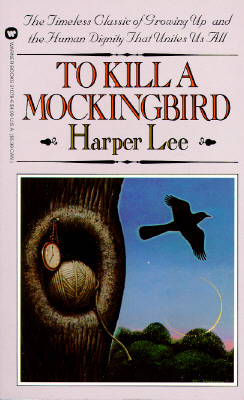
Who Am I?


You're To Kill a Mockingbird!

by Harper Lee

Perceived as a revolutionary and groundbreaking person, you have
changed the minds of many people. While questioning the authority around you, you've
also taken a significant amount of flack. But you've had the admirable guts to
persevere. There's a weird guy in the neighborhood using dubious means to protect you,
but you're pretty sure it's worth it in the end. In the end, it remains unclear to you
whether finches and mockingbirds get along in real life.


Take the Book Quiz
at the Blue Pyramid

(Via The Quaker Agitator)

Thursday, January 31, 2008

Cartoon of the Day


Steve Kelley, Times-Picayune

It's All Who You Know

I'm not a betting person, but a wager on this would have been a sure thing. Based upon the progress of the grand jury investigation into the owner of the Mount Airy Casino, the only surprise would have been if Louis DeNaples hadn't been indicted. For earlier posts on this case, see The Collection, The Holy Gun and The Electric Connection.

As the Scranton Times reports, Casino owner accused of perjury over mob links, license stripped:

The owner of a casino in the Pocono Mountains was charged with perjury Wednesday for allegedly lying about his relationships with organized crime figures to win a lucrative gambling license, and state regulators quickly barred him from the business.

Louis A. DeNaples, who opened Mount Airy Casino Resort in October, was charged with four counts of perjury after a seven-month investigation by a Dauphin County grand jury into what he told state gambling regulators during a prelicense background investigation. His company, Mount Airy No. 1 LLC, also was charged.

* * * *

For example, DeNaples told the gaming board he knew D'Elia only as a customer of his bank who occasionally patronized his auto-parts store. The grand jury said DeNaples had a "close relationship with D'Elia spanning many years," that DeNaples was a guest at D'Elia's daughter's 1999 wedding and that DeNaples' unlisted home telephone number was found in an address book that police seized from D'Elia's car in 2006.

DeNaples told the gaming board he knew Bufalino "only by name." In the 1970s, the panel said, Bufalino gave DeNaples three suits to wear to meetings after his home was struck by fire. DeNaples also gave Bufalino, a mechanic, two junked Fiats to work on, the grand jury said.

Bufalino served lengthy prison terms in the 1970s and '80s and died in 1994.

DeNaples told gaming board investigators that he could not clearly remember ever meeting Ali and that he had no interest in Ali's proposal to ship waste from Philadelphia to DeNaples' landfills. The grand jury, however, cited a telephone conversation the FBI recorded in 2002 in which DeNaples told Ali, "it would be business for us and we'd be very appreciative if we got it."

DeNaples also denied knowing or doing business with White. Other witnesses recalled a meeting in DeNaples' office in which he "ranted" about not being able to reach White by telephone after he gave him $50,000, according to the presentment.

White, a key fundraiser for Street, died of cancer in 2004 before he was to be tried as the central figure in a separate federal investigation of Philadelphia's "pay-to-play" culture. Ali, a prominent Muslim cleric in Philadelphia, is serving a seven-year prison term that stemmed from the probe.

However, I can't help but note the fact that DeNaples was charged with only four counts of perjury, which means that, despite the intense investigation, there wasn't that much of substance that was uncovered during the investigation. Not to say that perjury isn't serious, but the government obviously wasn't able to uncover anything that directly linked DeNaples to the mob, so they went for perjury.

And, despite protestations to the contrary, there is definitely a bit of a turf battle lurking behind this case. As the Pocono Record relates, Mount Airy owner DeNaples charged with perjury over mob-tie claims:

The gaming board, which vetted casino applications, awarded a license to DeNaples after investigating his background for organized crime ties, financial troubles and more.

Through Feeley, DeNaples has maintained that he has no ties to organized crime. His lawyers have accused Dauphin County prosecutors of misusing the grand jury as a fishing expedition and a tool in a turf war over who should regulate the state’s casinos.

More than two dozen witnesses, including D’Elia, appeared in front of the grand jury. D’Elia is in federal prison awaiting trial on charges of money laundering and conspiring to kill a prosecution witness. Dauphin County prosecutors brought the case to the grand jury last year after reviewing information given to them by state police investigators.

Once again, this is similar to the situation where the cover up is worse than the "crime." DeNaples is from the Scranton-area. It's the kind of place where everybody knows everybody. We're talking 2-3 degrees of Kevin Bacon (vs. 6 degrees) at most. Knowing D'Elia and Bufalino would not be unusual -- in fact, it would be surprising if DeNaples didn't know them. Just knowing them, however, doesn't mean he was involved in their mob activities. That requires a difference level of proof -- and knowledge. I'm just not sure that what is alleged here qualifies as that kind of knowledge.

The Philadelphia Inquirer, in Poconos casino owner charged, describes the alleged relationship between the parties:

DeNaples, according to the affidavit, also lied about his ties to the two top organized-crime figures in northeastern Pennsylvania.

He said he knew D'Elia as a customer of his auto-parts supply store and the bank he founded, but denied regularly meeting with him.

Prosecutors maintain that DeNaples and D'Elia were so close that years ago D'Elia visited DeNaples' father as he lay dying. Once his father died, DeNaples gave his father's rosary beads to D'Elia, the affidavit says.

It also said D'Elia frequently met with DeNaples at the auto-parts store, and arranged for the free printing of store brochures.

D'Elia, who is under indictment on charges of conspiracy to launder money among other offenses, testified before the grand jury.

DeNaples also was close to Bufalino, prosecutors allege in the 23-page affidavit.

When DeNaples' house burned down in the 1970s, Bufalino personally delivered three suits to DeNaples so he could wear them at meetings, the court papers said.

The papers also said that in the 1970s, DeNaples complimented Bufalino at a boxing match about a ring he was wearing, and Bufalino later gave it to him as a gift.

When asked about Bufalino, DeNaples told gaming board officials that he knew him only by name and what was printed about him in newspapers.

See also, Four perjury counts against DeNaples; slots license suspended. Certainly the allegations, if true, would support a charge of perjury, but they just don't prove that DeNaples was involved with the mob. Yet, it makes it understandable why he would try to distance himself from any affiliation with them, since no distinction seems to be made between "knowing them" and just knowing them.

What was worse to me was his response to questions about knowing the other individuals from Philly -- Ron White, John Street and Shamsud-din Ali:

During those sessions, he was pressed about his relationships with the late mob boss Russell Bufalino; Bufalino's protege, William D'Elia; the late Ron White, a chief fund-raiser for former Mayor John Street; and Shamsud-din Ali, the West Philadelphia imam who is serving time in connection with the City Hall corruption investigation.

When asked about Ali, DeNaples said that he did not know him, but that it was possible he had a "very, very short conversation" with Ali and "another black person" about bringing sludge from Philadelphia to landfills he owns in the Scranton region.

Shown a picture of Ali, DeNaples said he could not identify him because "to me, black people all look alike."

But prosecutors allege that DeNaples not only had met with Ali - who later testified before the grand jury - but also had extensive phone conversations with him. (Emphasis added)

Does that bring back memories of Scranton -- except that I had thought those views had long ago receded into the past.

Wednesday, January 30, 2008

Good bye & Good Luck


On my way to the office this morning, I got the news that John Edwards was exiting the campaign. As the Huffington Post reported, John Edwards To Drop Out Of Race:

Democrat John Edwards bowed out of the race for the Democratic presidential nomination on Wednesday, saying it was time to step aside 'so that history can blaze its path' in a campaign now left to Hillary Rodham Clinton and Barack Obama.

'With our convictions and a little backbone we will take back the White House in November,' said Edwards, ending his second campaign in the same hurricane-ravaged city where he began it more than a year ago.

Edwards said Clinton and Obama had both pledged that 'they will make ending poverty central to their campaign for the presidency.'

'This is the cause of my life and I now have their commitment to engage in this cause,' he said before a small group of supporters. He was joined by his wife Elizabeth and his three children, Cate, Emma Claire and Jack.
I have to admit that I was sad to hear the news. Not that it mattered, since I'm in a "don't count" state (Pennsylvania), but I was an Edwards fan. I think he was the most liberal of all of the candidates -- and I don't buy the "he can't relate to poor people because he's rich." Since when did we lose our capacity to empathize with others just because they are different? That's a Republican trait, not a universal tendency (can you say Roosevelt? Kennedy?). I also believe that the media was a major factor contributing to the fact that his message didn't get out. He was basically ignored and minimized throughout the campaign. We talk about issues of voter fraud, but the manipulation of the electoral process by the media likewise impacts the outcome of the election -- without a ballot ever being cast. See also, Ted Rall's take on the media, Who's Afraid of John Edwards?.

Of course, I do feel that both Clinton and Obama are more than qualified to be President and I could be happy supporting either one, so all is not lost. I attended an event several year's ago during which Hillary Clinton was the featured speaker and I must say that I was impressed by her poise and intelligence. Hillary gets pilloried more than she deserves. Also, Obama's inspirational message may be what the country needs at this low point, coming after the long reign of the Bush Administration. Yet, I still think that we may have missed out with losing Edwards.

As did Edwards, I'd like to end on a positive note, looking at the benefit we got from Edwards being in the race. As Jonathan Cohn of The New Republic notes, Why John Edwards Won:
As anybody who attended his town meetings could attest, he may have been the most effective campaigner of all—capable of establishing an instant connection with audiences, then sweeping them up with a moving, coherent story about what was wrong with America and how he proposed to fix it. Edwards was also, I would argue, a more versatile campaigner than his rivals. He was terrific working the grassroots, much like Obama, but also excelled in the debates, just as Clinton has. As his advisers were constantly reminding reporters—most memorably, through this priceless video—focus groups frequently named Edwards the overwhelming 'winner' in those televised exchanges. Alas, a media preoccupied with the Clinton-Obama rivalry rarely seemed to notice.

Still, if Edwards wants to blame somebody for his defeat, he shouldn't look at the media. He should look at himself. And I mean that in the best sense possible. Edwards' biggest problem may have been that he was too compelling—so compelling that his rivals effectively adopted his agenda. From the beginning, Edwards was positioning himself as the champion of Americans struggling to get ahead financially. And rather than simply offer populist rhetoric, he backed it with a serious, comprehensive set of policies.

* * * *

When Edwards announces the end of his campaign today, he will do so where he began it: in New Orleans, which two years after Hurricane Katrina remains shamefully neglected. It's an altogether fitting setting, because it's a reminder that his campaign was always about the people whose interests and values he championed.

John Edwards ends his presidential candidacy today. His campaign, happily, goes on.

(Transcript available at Crooks and Liars)

Monday, January 28, 2008

A Fix for FISA?

The President says that without the changes to FISA that he wants (demands), the country will be a grave risk, yet he's planning to veto an extension of the Act. Likewise, telecommunication companies are a vital link to the process and need retroactive immunity, yet they were willing to pull the plug on wiretapping when the government failed to pay their bills. So, if you get the idea that the latest FISA dust-up is a lot of dust to disguise the real motive -- secrecy over the violations of our civil liberties that have already occurred and immunity to ensure that they'll never be uncovered (or prosecuted) -- you might be right.

A NYTimes editorial sums it up, The FISA Follies, Redux:

The Senate (reportedly still under Democratic control) seems determined to help President Bush violate Americans’ civil liberties and undermine the constitutional separation of powers. Majority Leader Harry Reid is supporting White House-backed legislation that would expand the administration’s ability to spy on Americans without court supervision and ensure that the country never learns the full extent of Mr. Bush’s illegal wiretapping program.

The 1978 Foreign Intelligence Surveillance Act, or FISA — which Mr. Bush decided to ignore after 9/11 — requires a warrant to intercept telephone calls and e-mail messages between people in the United States and people abroad.

It needed updating to keep pace with technology, and the technical fixes were included in a bill that Congress passed last summer. The problem was that Mr. Bush managed to add measures that sharply undercut the court’s role in monitoring eavesdropping. Fortunately, lawmakers gave them an expiration date of Feb. 1.

The House has passed a reasonable new bill — fixing FISA without further endangering civil liberties. But Mr. Bush wants to weaken FISA as much as he can. And the Senate leadership has been only too happy to oblige.

* * * *
Mr. Bush says without amnesty, the government won’t get cooperation in the future. We don’t buy it. The real aim is to make sure the full story of the illegal wiretapping never comes out in court.
* * * *
Lawmakers and the rest of the nation should bear this in mind: Mr. Bush’s version of this law does not make intelligence-gathering more robust. Opponents like Senators Christopher Dodd and Patrick Leahy want to spy on Al Qaeda, too. They’re just not willing to do it in a way that undermines the very democracy that the spies, Congress and the president are supposed to be protecting.
Like the Americans who have been deported or gotten caught up in immigration sweeps, see Born in the U.S.A., don't think it can't happen to you. See FISA: Wiretapping Without A Warrant. It Could Be You Next. These are the people who lied us into a war. A little spying ain't nothing.

The only reason Bush hasn't gotten his way so far is because of Chris Dodd, who has held firm in his commitment to block this bill. Glen Greenwald explains the significance in his Salon blog, More disruptions to the Cheney/Rockefeller plan:

Dodd has been in the Senate for 24 years. As he is the first to acknowledge, engaging in filibusters and obstruction and defiance of his party's leadership are things he has almost never done. Dodd isn't Russ Feingold. He has been the picture of the establishment Senator in the party's "liberal" wing, rarely deviating and almost never standing alone to oppose the party leadership. So what has changed? Why has he been so willing so tenaciously to pursue this fight -- even in the face of overt though anonymous threats that he could alienate his party's leadership and lose influence as Banking Committee Chairman if he persists?

Dodd himself provided the answer in his Senate floor speech (h/t Kitt):

I've promised to fight those scare tactics with all the power any one senator can muster. And I'm here today to keep that promise.

For several months now, I've listened to the building frustration over this immunity and this administration's campaign of lawlessness. I've seen it in person, in mail, online -- the passion and eloquence of citizens who are just fed up. They've inspired me more than they know.

That is exactly what happened. When the administration first demanded retroactive immunity in the wake of the passage of the Protect America Act, nobody was talking about that issue outside of blogs and grass-roots and civil liberties organizations -- the roster of annoying citizen-groups that are typically ignored. But the pressure built; it became increasingly intense and relentless; it found a political official in Chris Dodd willing to ride it; and it unquestionably has altered the course of how all of this has played out.
And the irony is that the Democrats would have caved on the issue, but the Bush Administration decided to hold off letting them acquiesce so that it could blast the Democrats at the SOTU address tonight for being soft. Notwithstanding that irony, the ultimate significance of Dowd's stand is this:
But what incidents such as this one conclusively demonstrate is that it is always possible, if enough citizen intensity is mustered and the right strategy is formulated, for citizens to disrupt and defeat the best-laid plans of our corrupt political establishment. There's a comfort and temptation in denying that truth. Those who insist that defeat is inevitable and All is Lost are relieved of the burdensome task of trying. But defeat occurs because the right strategy isn't found, not because it is inevitable.
And finally, this is why John Edwards needs to stay in the race. He's the only candidate addressing the FISA issue:

When it comes to protecting the rule of law, words are not enough. We need action.

It’s wrong for your government to spy on you. That’s why I’m asking you to join me today in calling on Senate Democrats to filibuster revisions to the Foreign Intelligence Surveillance Act (FISA) that would give “retroactive immunity” to the giant telecom companies for their role in aiding George W. Bush’s illegal eavesdropping on American citizens.

John Edwards '08 Blog

Who knows if we'll be successful in trying to preserve the Constitutional protections. There are too many wussy Democrats in Congress to count on them to do the right thing. Yet, hope is sometimes all there is. And sometimes it works, as Greenwald notes:

Even just a two-week or one-month extension will allow more time to marshall the opposition to telecom immunity and a new FISA bill and to do what's possible to encourage the House to stand firm behind their bill -- in exactly the way that the Dodd Delay in December prevented quick and easy resolution. The longer this drags on without resolution, the more possible it is to push the opposition to a tipping point, and sometimes unexpected developments or even some luck (such as McConnell's overplaying his hand on Thursday) can prevent it all from happening.

As the events of the last two months demonstrate, if citizen opposition is channeled the right way, it can make a genuine difference in affecting the course of events in Washington. Defeating telecom immunity will keep alive the lawsuits that will almost certainly reveal to some extent what the Government did in illegally spying on Americans over the last six years or, at the very least, produce a judicial adjudication as to its illegality. And, in turn, the effects from that could be extremely significant. Because victories are so rare, it's easy to get lulled into believing that none of these campaigns are ever effective and that citizens can never affect any of it, which is precisely why it's so important to remind ourselves periodically of how untrue that proposition is.

UPDATE (and post edited): Apparently, Senator's Clinton & Obama now plan to attend today's Senate session to vote no on cloture. I guess a little dust-up every once in a while is needed to clear the air and see what's happening. See TPM, Today's Must Read, for more details on the status of the legislation.

Saturday, January 26, 2008

Cost of War: Priceless


This video, from the American Friends Service Committee, describes the Cost of War:

The estimated cost of the first four years of the Iraq War is $1 trillion.

For what we have spent for just ONE DAY of the Iraq War, we could have funded:

  • 95,364 Head Start Places for Children or
  • 12,478 Elementary School Teachers or
  • 163,525 People with Health Care or
  • 34,904 Four Year College Scholarships or
  • 6,482 Families with Homes
As AFSC asks: The Iraq war costs $720 million per day. How would you spend it?

Of course, beyond the financial aspect, the cost is incalculable. The lost lives and untold injuries. Over 3,900 American deaths and 28,900 wounded. Hundreds of thousands of Iraqis have died since the U.S. invasion and 4 million have fled their homes.

All for a lie.

The cost? Priceless.

As the AFSC puts it: Not one more death, not one more dollar.

Sign the DEFUND/REFUND Petition and spread the word.

(Via Fact-esque)

Cartoon of the Day


Mike Luckovich, Atlanta Journal Constitution

Born in the U.S.A.

Perhaps I might feel differently if the person involved was Joey Vento, the anti-immigrant Italian American owner of Geno's Steaks in South Philly. Otherwise, this story is yet another horrendous example of the loss of our constitutional rights during the Bush reign of terror. The Washington Bureau of the McClatchy papers reports about the near deportation of an American citizen, in Immigration officials detaining, deporting American citizens:

Thomas Warziniack was born in Minnesota and grew up in Georgia, but immigration authorities pronounced him an illegal immigrant from Russia.

Immigration and Customs Enforcement has held Warziniack for weeks in an Arizona detention facility with the aim of deporting him to a country he's never seen. His jailers shrugged off Warziniack's claims that he was an American citizen, even though they could have retrieved his Minnesota birth certificate in minutes and even though a Colorado court had concluded that he was a U.S. citizen a year before it shipped him to Arizona.

* * * *

The story of how immigration officials decided that a small-town drifter with a Southern accent was an illegal Russian immigrant illustrates how the federal government mistakenly detains and sometimes deports American citizens.

U.S. citizens who are mistakenly jailed by immigration authorities can get caught up in a nightmarish bureaucratic tangle in which they're simply not believed.

An unpublished study by the Vera Institute of Justice, a New York nonprofit organization, in 2006 identified 125 people in immigration detention centers across the nation who immigration lawyers believed had valid U.S. citizenship claims.

* * * *

Unlike suspects charged in criminal courts, detainees accused of immigration violations don't have a right to an attorney, and three-quarters of them represent themselves. Less affluent or resourceful U.S. citizens who are detained must try to maneuver on their own through a complicated system.

"It becomes your word against the government's, even when you know and insist that you're a U.S. citizen," Siulc said. "Your word doesn't always count, and the government doesn't always investigate fully."

* * * *

While immigration advocates agree that the agents generally release detainees before deportation in clear-cut cases, they said that ICE sometimes ignores valid assertions of citizenship in the rush to ship out more illegal immigrants.

Proving citizenship is especially difficult for the poor, mentally ill, disabled or anyone who has trouble getting a copy of his or her birth certificate while behind bars.

Pedro Guzman, a mentally disabled U.S. citizen who was born in Los Angeles, was serving a 120-day sentence for trespassing last year when he was shipped off to Mexico. Guzman was found three months later trying to return home. Although federal government attorneys have acknowledged that Guzman was a citizen, ICE spokeswoman Virginia Kice said Thursday that her agency still questions the validity of his birth certificate.

* * * *

The attorneys said the chances of mistakes are growing as immigration agents step up sweeps in the country and state and local prisons with less experience in immigration matters screen more criminals on behalf of ICE.

I recall an old expression from many years ago that a Republican is a liberal who has been mugged. I wonder if a liberal (or progressive) is a conservative who's gotten caught up in the nightmare realm of experiencing a loss of the basic civil rights that we've come to expect as part of being an American?